Skip to content


- Maximizing a workers’ compensation settlement requires strategy, timing, and thorough documentation from the very beginning of your claim.
- Completing medical treatment and waiting until maximum medical improvement (MMI) helps ensure your settlement reflects the full extent of your injuries.
- Insurance companies use tactics such as IMEs, surveillance, and low initial offers to reduce payouts.
- Mistakes like returning to work too early or posting on social media can significantly decrease your compensation.
- Partnering with an experienced attorney can increase negotiation leverage and protect your long-term financial stability.
Maximizing a workers’ compensation settlement requires strategy, timing, and documentation, and often partnering with an experienced attorney who can negotiate on your behalf. Informed decisions can significantly impact long-term financial stability. Learn more about how to get the most out of your claim today by scheduling a consultation with NST Law.
Table Of Contents
Proactive Actions To Raise Your Settlement’s Value
Complete All Recommended Medical Treatment
It is important to follow through with all treatments prescribed by your doctor. This not only benefits your physical recovery but also increases the value of your claim by proving the extent of your damages.
Follow Your Doctor's Instructions Carefully
Deviating from medical advice can be used against your claim. Insurers will often argue that your injuries are not as bad as you claim if you did not finish treatment or failed to attend appointments.
Document Everything Consistently
Maintaining thorough records of symptoms, treatments, and expenses strengthens your claim. Each form of documentation serves as evidence of your injuries and their extent of severity.
Avoid Returning To Work Too Early
Returning to work prematurely can negatively impact both your health and settlement value. Working can hinder your recovery and the overall healing process, especially in laborious positions. However, even if you return to work before your body is ready, insurers can still use this to argue for a lower settlement.
Understand Your Long-Term Medical Needs
It is essential to obtain a full prognosis before accepting any settlement offer. Maximum medical improvement (MMI) is the point at which a person has reached the furthest recovery they are likely to achieve. Waiting for your doctor to make this call allows you to calculate a sufficient settlement amount.
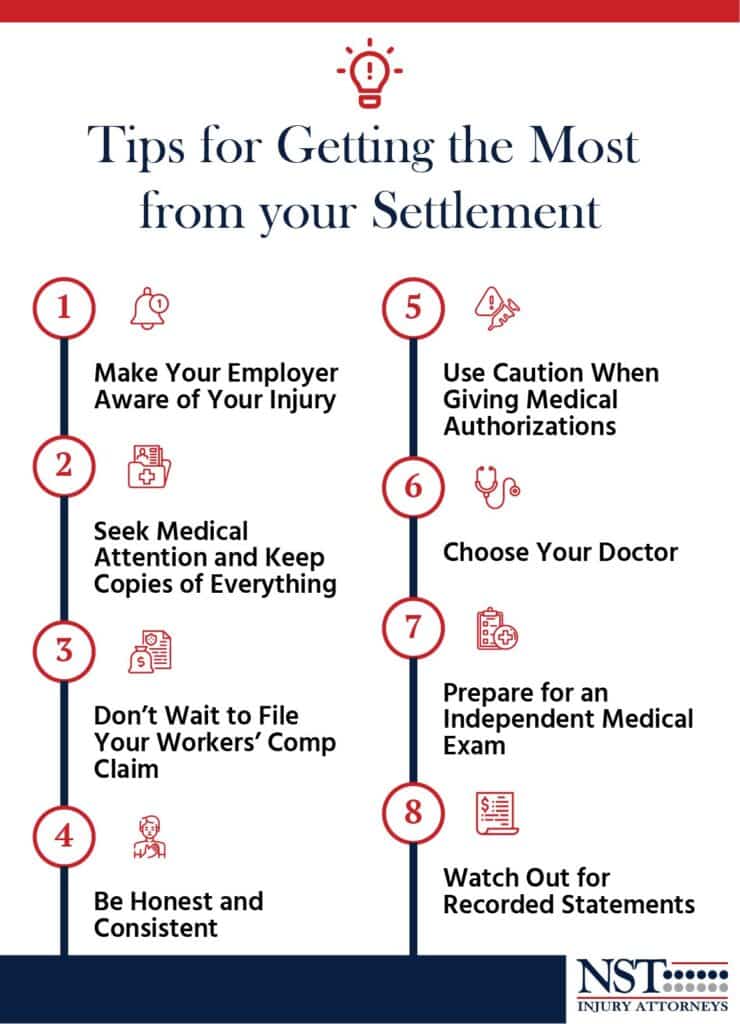
Common Mistakes to Avoid That Reduce Workers’ Comp Settlements
There are several mistakes claimants make that result in a lower payout than needed, including the following:
- Settling before reaching maximum medical improvement (MMI) – Not waiting to see the full extent of damages will likely lead to accepting an inadequate compensation award.
- Failing to report symptoms accurately – Be precise and detailed when providing information about your symptoms. Do not over- or underexaggerate the effects; both can backfire and hurt your claim.
- Posting about injuries on social media – Insurers can and will use any statements made, verbally or online, to minimize your damages.
- Missing deadlines or required documentation – Each state provides deadlines for filing personal injury and workers’ compensation claims, known as the statute of limitations. Failing to file within this deadline can bar you from recovery. Similarly, failing to include the required documentation with your claim can result in a denial.
- Accepting the first offer without review – Insurers typically present a lowball settlement offer at first and may pressure the plaintiff to accept and settle the claim quickly.
How Insurance Companies Try to Minimize Payouts
Insurers are trained to use pressure tactics to minimize payouts. Some of the most common strategies include disputing medical necessity and liability. To combat these tactics, it is essential to provide a compelling and sufficient claim.
Independent Medical Exams and Surveillance
Insurance companies often use Independent Medical Exams (IMEs) and surveillance as strategic tools to limit or deny workers’ compensation and injury claim payouts. While IMEs are presented as “objective,” they are typically arranged and paid for by the insurer, which shapes how the information is used.
Insurance Adjusters
Insurance adjusters evaluate claims to predict financial exposure and control costs. Understanding how they calculate risk helps explain why injured workers often face resistance and why advocacy matters. Having a seasoned attorney as your advocate can help you avoid pushback from these entities.
Partner With a Workers’ Compensation Lawyer To Maximize Your Claim
One of the most difficult parts of a claim is negotiations with insurers. Our experienced attorneys can aggressively negotiate with insurance companies to secure a fair settlement. We have the skill set and knowledge to properly evaluate the present and future costs of your damages, as well as your disability rating, if applicable.
Our firm prepares each case as though it will proceed to court. Insurers know that we will not back down, giving us the upper hand from the beginning. With NST Law’s experience and commitment to pursuing maximum compensation, you can trust our team to get the job done.
Schedule a Case Review With NST Law Today
Never accept the initial offer from insurers; always speak with a legal advocate before negotiating. Our compassionate attorneys have over 35 years of experience and have won billions for injured clients.
We offer free consultations, no upfront fees, and thoroughly prepare cases, ready to litigate when necessary. One conversation can protect your long-term financial security. Contact NST Law today at 800-529-4004 to learn more.
Workers’ Comp Settlements Frequently Asked Questions
When Should You Consider a Lump Sum Settlement?
A lump sum settlement may be worth considering when you have reached maximum medical improvement, understand your future medical needs, and want financial certainty instead of ongoing payments. It also makes sense if you are ready to move on from the claim and are confident the settlement fully accounts for future wage loss and treatment.
Can I Negotiate a Workers’ Comp Settlement?
Yes, workers’ compensation settlements are negotiable in many cases, especially when there are disputes over disability ratings, work restrictions, or future medical care. The final amount often depends on the strength of medical evidence and the projected value of the claim.
Should I Accept the First Settlement Offer?
Initial settlement offers are often lower than the full potential value of a claim because insurers factor in negotiation room and attempt to limit exposure. Carefully reviewing the offer ensures it reflects the true cost of your medical care, lost wages, and long-term limitations.
How Are Workers’ Comp Settlements Calculated?
Settlements typically consider past and future medical expenses, lost wages, and any permanent disability rating assigned by a physician. Temporary disability benefits cover short-term wage loss, while permanent disability benefits account for lasting impairment, and future medical needs can significantly increase settlement value.
What Happens if My Workers’ Comp Claim Was Denied?
If your claim is denied, you generally have the right to appeal through your state’s workers’ compensation system and present medical evidence supporting your injury. In many cases, denied claims can still result in approved benefits or negotiated settlements after a formal review or hearing.